Interviews with fascinating people on science, ethics, and politics.
Episodes

Friday Oct 25, 2019
Friday Oct 25, 2019
Andrés Gómez Emilsson is the Director of Research at the Qualia Research Institute (QRI). QRI aims to systematize the study of consciousness, to do to consciousness what chemistry did for alchemy. He holds a master’s degree in computational psychology and an undergraduate degree in symbolic systems from Stanford University, where he co-founded the Stanford Transhumanist Association.
This is a pretty wild episode touching on some of the most important and mind-bending ideas I’ve ever encountered, centered around a single question: why can't we be happy all the time?
We get into some pretty wacky territory but I think Andrés does a good job of making this approachable to somebody who has never encountered these ideas before.
We use the term intuition pump a few times, this is a word coined by the philosopher Daniel Dennett to describe a thought experiment that helps the thinker use their intuition to develop an answer to a problem.
We cover:
Andrés’s life project to overcome all the mechanisms that prevent us from being happy all the time, the hedonic treadmill, the promise of anti-tolerance drugs, the influence of genetics on our ability to be happy, how electric stimulation of the brain doesn’t lead to tolerance the way drugs do, wireheading done right and wrong, three types of euphoria, the social gulf between Bay Area life-optimizers and everyone else, negative utilitarianism, the worst and best experiences humans have, the therapeutic and scientific potential for 5-meo-dmt, psychedelics as Effective Altruism’s cause X, the best way to use ibogaine for treating opiate addiction, a better approach to using opiates for pain management, and why people report wacky new beliefs after ego dissolving psychedelic experiences
Links:
Simon and Garfunkel song: Richard Cory
Andrés’s article: Wireheading Done Right: Stay Positive Without Going Insane
84% of drug users who report a bad trip say they benefited from the experience
NYMag: Psychedelic Mushrooms Cured My Cluster Headaches
NY Public Radio interview on how Harry Anslinger started the war on drugs
The Qualia Research Institute (QRI)
QRI executive director Mike Johnson’s blog: Opentheory.net
Wednesday Oct 16, 2019
Wednesday Oct 16, 2019
Matt Stoller is a fellow at the Open Markets Institute and the author of Goliath: the 100 Year War Between Monopoly Power and Democracy (out now!). He was previously a Senior Policy Advisor and Budget Analyst to the Senate Budget Committee and worked in Congress on financial services policy, including Dodd-Frank, the Federal Reserve, and the foreclosure crisis. Matt has written for the New York Times, the Washington Post, the Atlantic, the New Republic, and elsewhere. As we discuss, Matt had a brief excursion in Hollywood, where he was a writer and actor on a TV show with Russell Brand. You may be most familiar with Matt from his very active and entertaining Twitter feed (@mattherstoller).
Goliath is a “big idea” history coming at the right time. Concentrated corporate power affects your life every day, in ways both subtle and obvious. The domination of key industries by a handful of megacorporations is not the natural or permanent state of affairs. We have successfully fought and tamed monopolies before, but have forgotten how. Goliath reminds us of the way forward.
We discuss:
Matt’s path from being a remorseful Iraq War supporter to being a vigorous opponent of concentrated financial power, the case for and against monopoly power, the neoliberal roots of the disastrous response to the financial crisis, the link between monopoly power and fascism, dangerous and desirable monopolies, the massive state intervention in the economy during and after WWII, the proper role for finance in society, the real basis for the American dream, the impact of fair trade laws and their repeal, whether small businesses are actually any better than big ones, how the ruling class frames their rule as inevitable, the law and economics movement, the Democrats’ betrayal of organized labor, the crisis of legitimacy for economics, antimonopoly’s political moment, and why Obama was actually bad.
Show notes:
Matt’s work:
When American Capitalism Meant Equality
The Progressive Case Against Obama
Other links:
Louis Brandeis's book Other People’s Money, and How the Bankers Use It (free ebook)
Dark Money: the Hidden History of the Billionaires Behind the Rise of the Radical Right
Obama’s not as tough on mergers as you think
On the Obama admin’s role in the 737 Max scandal: The emerging 737 Max scandal, explained
Wednesday Oct 02, 2019
Wednesday Oct 02, 2019
Leah Garcés is the president of Mercy for Animals, one of the world’s largest effective animal advocacy organizations. She was previously the executive director of Compassion in World Farming USA. Today we discuss her new book Grilled: Turning Adversaries into Allies to Change the Chicken Industry. Leah tells the remarkable story of how she teamed up with farmers to expose the world to the horrible conditions and practices in American chicken farms. As we discuss, her work with farmers, journalists, documentarians, and activists pressured chicken producers to make significant commitments to improve welfare standards for their birds.
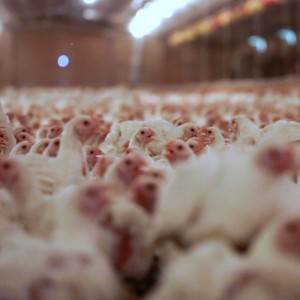
Even if you don't care about the welfare of chickens for whatever reason, the labor conditions of the typical chicken factory farmer should be enough to outrage you. Saddled with debt and squeezed by an oligopoly of chicken producers, the typical American chicken farmer eeks out poverty wages and spends their days walking through ammonia-clogged chicken coops picking out dead birds.
Beyond these campaigns, Mercy for Animals produces a lot of other great work, like their drone footage of factory farms and the destruction of the Amazon.
Specifically, we discuss:
Leah’s vision for how we’ll relate to animals in 2050, why we should care about chickens, the evidence we have that they can suffer, conditions in a typical coop, how chickens have been bred to suffer, how Leah started working with a chicken factory farmer, the brutal economics and lifestyle of chicken farming, how the incentives conspire against the welfare of the chickens and the people farming them, Leah's work getting footage of chicken farms out to the world, her meetings with executives at chicken producers and the resulting welfare improvements, whether factory farming is the greatest moral atrocity in the world, whether factory farm executives are like war criminals, whether companies will make good on their animal welfare commitments, and her plans for Mercy for Animals.
Show notes:
NYT Opinion piece Leah’s work prompted: Abusing Chickens We Eat
Wired article on Leah’s work with Craig Watts: Hoping to Change the Industry, a Factory Farmer Opens His Barn Doors
Effective Altruism Forum post: Will companies meet their animal welfare commitments?
From Open Philanthropy’s Lewis Bollard: Will Companies Make Good on Cage-Free Pledges?